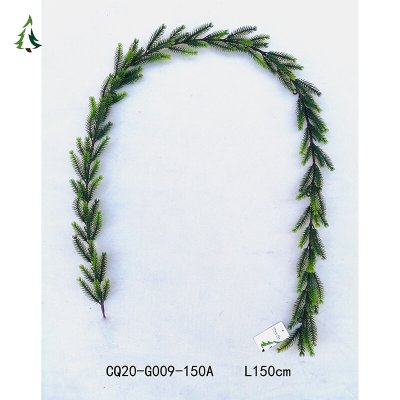
Do Not Display Flat Window Wreaths Too Soon
When you first unbox a compressed window wreath from an export carton, it can often appear flatter than anticipated. For buyers who source China Decorative Christmas Tree Branches, wreaths, mini trees, and garlands as part of a seasonal collection, that initial impression doesn't have to dictate the final merchandising decision. The solution is quite straightforward: clear instructions for branch expansion, tip shaping, and dry wiping should always accompany the products. This ensures that retail teams know precisely how to prepare each item for optimal display.

Why a Care Card is Essential for Compactly Packed Wreaths
Take our Christmas Queen Wreaths For Windows model CQ19-W005-48C, for instance. Its product guidance explicitly states that the wreath is packed in a relatively small box for transportation, and that expanding the branches and adjusting the pine needles after unpacking is crucial to achieve its best shape. This level of detail is vital for any buyer comparing China Decorative Christmas Tree Branches and artificial wreath branches for wholesale or retail programs. The goal is to maximize the visual appeal and longevity of these beautiful decorations, crafted from premium PE material to be entirely realistic, vivid, and vibrant.
There's a key distinction between how a product looks when compressed for efficient shipment and how it should appear once fully prepared for the sales floor. Without instructions, store staff may assume the item is underfilled or poorly shaped, when in reality it simply needs manual adjustment. A short care card can help preserve the intended design, improve presentation consistency across locations, and reduce unnecessary product concerns during receiving and setup.
A simple retail floor process before display
For compactly packed wreaths, garlands, and decorative branch items, a basic preparation routine is usually enough. Teams do not need specialized tools, but they do need a repeatable process that can be followed quickly during holiday merchandising. This is especially useful when multiple cartons arrive at once and products must be staged, fluffed, and displayed within a limited setup window. Clear handling steps also help maintain a more consistent look between branches, tips, and wreath sections across an entire retail presentation.
- Remove the item carefully from the carton and avoid pulling on a single branch cluster.
- Separate and fan out each tip by hand, working gradually around the wreath or branch shape.
- Adjust the pine needles and branch angles until the profile looks full and balanced.
- Use a dry cloth to wipe away surface dust that may appear after packing and transit.
- Place the finished item in its display position only after the overall silhouette is even.

That shaping step is often where the biggest transformation happens. A branch that looks compressed in the carton can become visually rich once each tip is opened and positioned with care. This is particularly important for PE-based greenery, where the realism depends on depth, layering, and the natural spread of the needles. A dry wipe at the end further improves shelf readiness by removing transit dust without introducing moisture to the product surface.
What buyers should expect from suppliers
Buyers sourcing seasonal greenery should look beyond carton efficiency and unit appearance at first opening. Product readiness information matters just as much as material quality, color realism, and construction. Ideally, suppliers should provide concise unpacking guidance that explains how the product is meant to recover its intended shape after compression. This small operational detail can support faster store execution and lead to stronger in-store presentation during peak selling periods.
For window wreaths, decorative branches, mini trees, and garlands, the most useful instructions are practical rather than promotional. Teams benefit from knowing whether the item should be expanded by hand, how much reshaping is normal, and whether a dry cloth is recommended before display. That kind of guidance helps bridge the gap between export packing efficiency and final customer-facing presentation.